
What is Agile Development?
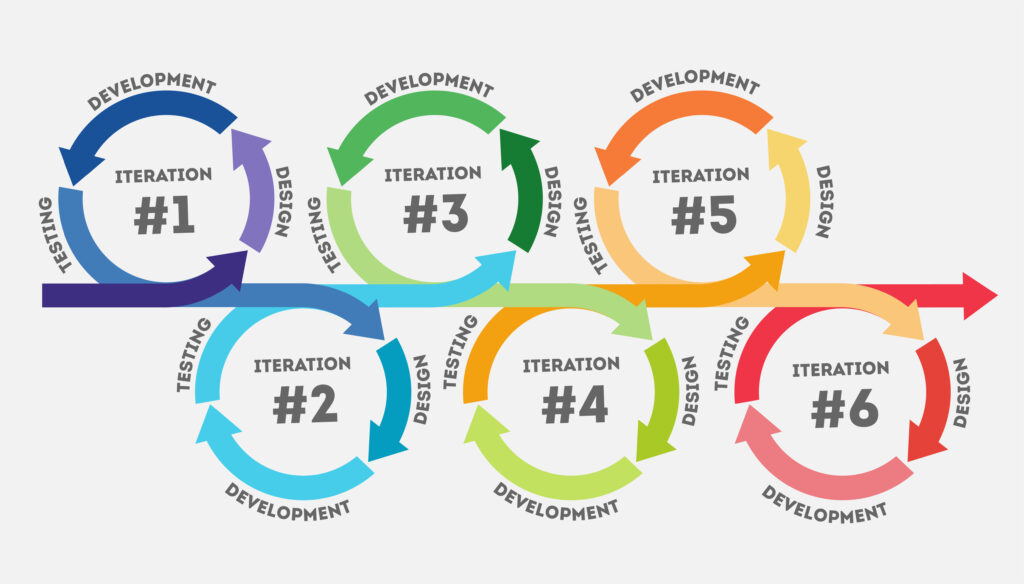
Source: i3solutions, What is Agile Development? September 16, 2021
AI Prompt: RM AI Prompt: Structure-Preserving Audit
AI Agent: Gemini
What is Agile Development?
Agile development is described as a transformative mindset that has redefined software programming since its formal inception in 2001.
The core of this approach is a mindset focused on the ability to create and respond to change in uncertain environments.
History of Agile Development
Agile emerged as a response to the inefficiencies of traditional project management, which often led to silos and delayed business outcomes.
The Agile Manifesto
The manifesto and its accompanying principles establish a philosophy focused on delivering real project value without the constraints of rigid traditional methods.
Individuals and interactions over processes and tools
Software creation relies on the collaborative power of dynamic teams rather than automated procedures or strict documentation.
Working software over comprehensive documentation
The methodology prioritizes the delivery of operable, functional increments of a project to provide immediate value to the end user.
Customer collaboration over contract negotiation
Ongoing involvement from the customer ensures that changing requirements are addressed throughout the development lifecycle for a better final product.
Responding to change over following a plan
Adaptability is favored over rigid adherence to a schedule, allowing teams to effectively handle the uncertainties inherent in shipping software.
Agile’s 12 Principles
These twelve guidelines expand upon the manifesto to define how teams can achieve competitive advantage through continuous delivery and technical excellence.
- Satisfying customers through early and ongoing delivery of valuable software
- Welcoming changing requirements, even late in development, because Agile channels change for the customer’s competitive advantage
- Delivering functional software often, within the shortest possible timeframe
- Assembling teams of business people and developers who collaborate daily
- Building projects around motivated individuals, and giving them the support and environment they need to work
- Conveying information in an efficient and effective manner through face-to-face discourse
- Measuring progress by functional software releases
- Promoting sustainable development so teams and users can maintain pace indefinitely
- Prioritizing technical excellence and good design
- Maximizing the amount of work not done
- Acknowledging that the best work comes from self-organized teams
- Allowing space for reflection at regular intervals where the team tunes and adjusts to become more effective
What is Agile Software Development?
Agile software development serves as an umbrella term for various frameworks that utilize cross-functional teams to provide iterative value.
Agile Development Process
This process functions as a project management philosophy that breaks large tasks into manageable, functional increments for flexible implementation.
Agile versus Traditional Project Management
A comparison between methodologies highlights how modern iterative approaches differ significantly from the linear “Waterfall” model.
Agile builds in increments versus as a whole
Teams deliver software through small, frequent iterations that allow for active feedback rather than building the entire system at once.
Agile does planning throughout versus done all at once
Continuous planning enables teams to course-correct as needed, avoiding the risks associated with static, front-heavy planning.
Agile delivers products over time versus all at once
Small, frequent releases reduce the costs and risks associated with “big bang” deployments and allow for earlier bug detection.
Customer sees value quickly versus waiting until the end
Agile wants changes versus discouraging changes
Agile changes the traditional project management triangle
…
Tverall customer service.