
STAR(T) Method
In a behavioral interview, the STAR method is your secret weapon for turning a vague “tell me about a time” question into a compelling, structured story. The START method is a slightly more modern evolution that ensures you leave a lasting impression by highlighting your growth.
1. The Anatomy: STAR vs. START
Both methods follow a logical narrative arc, but the “T” at the end of START is what differentiates a “good” candidate from a “senior-level” one.
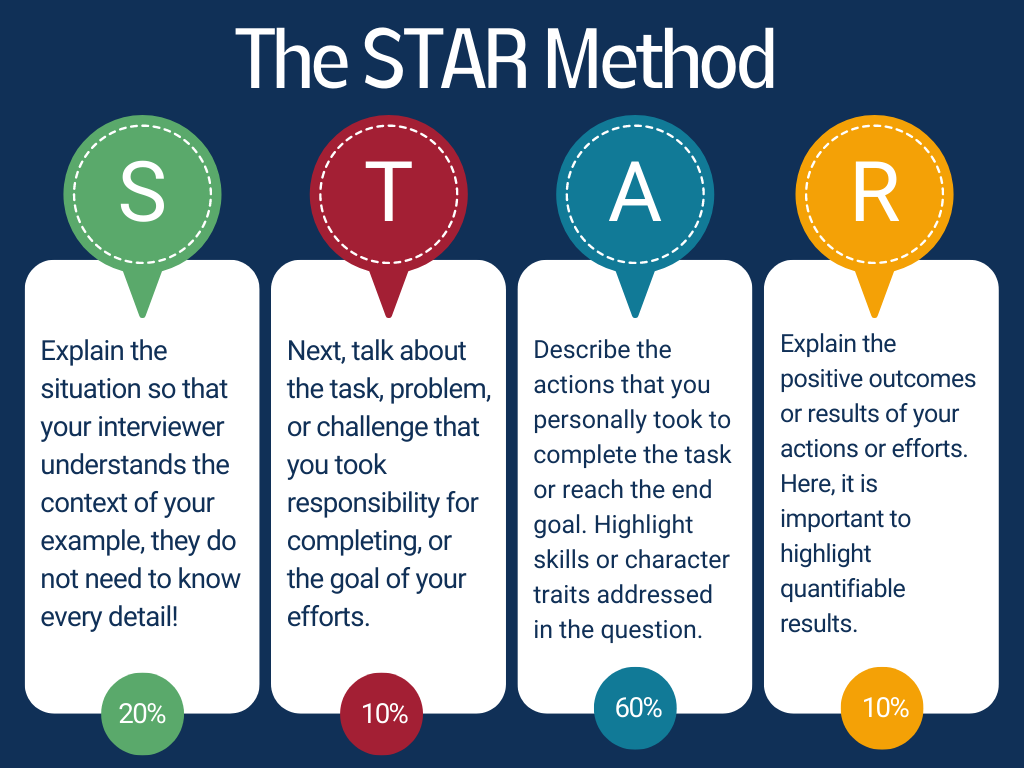
- S – Situation: Set the stage. Briefly describe the context, the project, or the conflict. (Keep this to 10% of your answer).
- T – Task: What was the specific objective or challenge you faced in that situation?
- A – Action: The meat of your answer. Explain exactly what you did. Not what the “team” did, but the steps you took, the tools you used, and the logic behind your choices.
- R – Result: What was the outcome? Use quantifiable data whenever possible (e.g., “reduced latency by 20%” or “saved $5k in monthly costs”).
- T – Takeaway (The START Bonus): What did you learn from this? How does this experience make you better prepared for this specific role?
2. Why the “T” (Takeaway) is a Game Changer
In a competitive market, interviewers aren’t just looking for someone who can do the job; they want someone who reflects and improves. The Takeaway shows:
- Self-awareness: You recognize why things worked or failed.
- Transferable Skills: You show exactly how your past helps the interviewer’s future.
3. Tips for Success (The “Pro” Layer)
To truly master these methods, keep these three strategic tips in mind:
A. The “I” vs. “We” Balance
While being a team player is great, an interview is an assessment of you. If you only say “we did this,” the interviewer doesn’t know what your contribution was.
- Tip: Use “We” for the Situation and Task, but switch strictly to “I” for the Action phase.
B. Quantify Everything
Vague results are forgettable. Specific numbers are “sticky.”
- Good: “I modularized the prompt library, which reduced the refinement process by 40% and cut token costs by 15% per request.“
- Bad: “I improved the prompt efficiency.”
C. The “Negative to Positive” Flip
If you are asked about a time you failed, use the START method to focus heavily on the Action (how you tried to fix it) and the Takeaway (what you’ll never do again). This turns a weakness into a demonstration of resilience.
D. Preparation
Strong STAR answers rely on clear examples and measurable results.
These should be prepared before the interview.
E. Practice
STAR answers need rhythm. Practicing helps you:
- avoid rambling
- stay concise
- sound confident
4. Preparation Strategy
Don’t try to memorize a script. Instead, build a Story Matrix:
| Category | Story 1 (Technical) | Story 2 (Conflict) | Story 3 (Leadership) |
| Situation | Legacy code mess | Disagreement with PM | Tight deadline |
| Action | Refactored into modules | Data-driven persuasion | Prioritized MVP |
| Result | 30% faster deployment | Feature launched on time | Stakeholders satisfied |
Reference

Reference
MIT, Using the STAR method for your next behavioral interview (worksheet included)