
A Rocket on a journey toward the dream
Integrating Semiconductor Engineering, Data Science, and Full-Stack Web Development for Scalable Innovation
Award‑winning semiconductor engineer and Ph.D. with breakthroughs in CMOS process, device, and yield. Combining deep technical expertise with AI/ML‑driven wafer analytics to deliver scalable, high‑impact solutions, including accelerated yield ramp‑up at Samsung. Currently building full‑stack platforms for engineering and commercial applications using AI agent.
Recent Posts
-
Wafer Level Zernike Polynomials
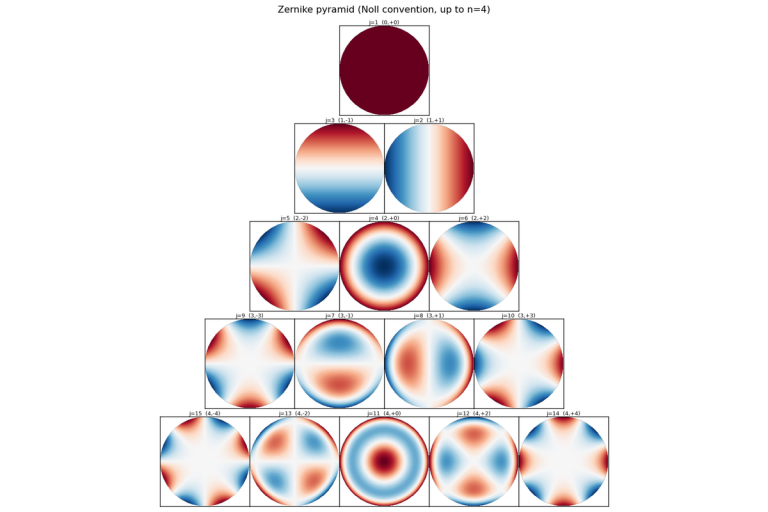
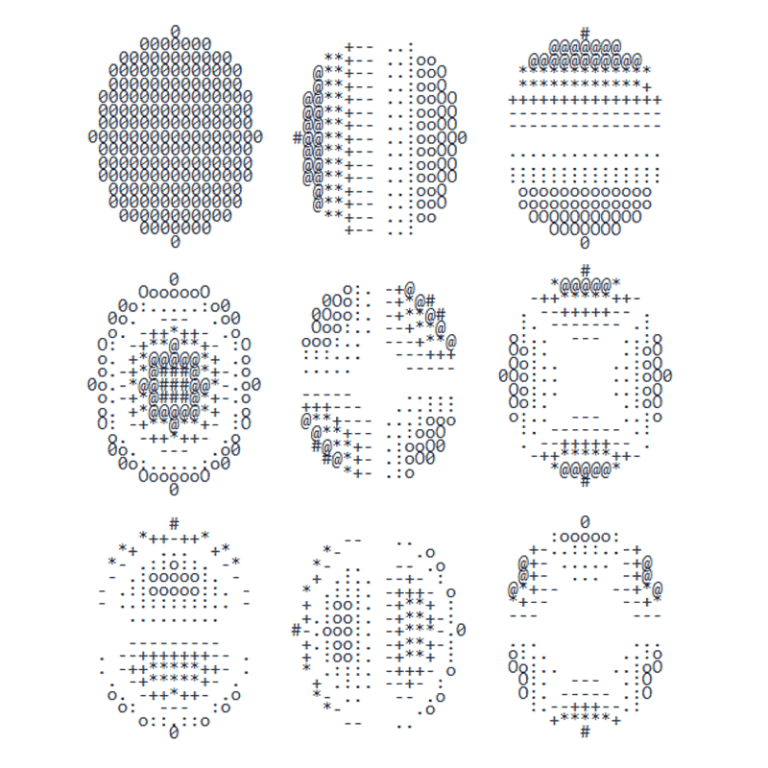
wlzpoly is a Python package that decomposes N-point wafer thickness measurements into M Zernike polynomial coefficients using LSQ or Ridge regression with LOOCV-tuned regularization. It ships with a reproducible three-stage demo (synthetic data, coefficient fitting, ground-truth verification), per-stage CLI, and a clean pure-Python API for semiconductor wafer-level process metrology.
-
A Taxonomy of Manufacturing Big Data: Integrating Machine and Human Data
1. Introduction: The Missing Link in Smart Manufacturing Investment in smart manufacturing and big data analytics has expanded rapidly, yet the focus has remained almost exclusively on Machine Data—the data automatically generated…
-
Python ML Pipeline Reproducibility — Field Notes
Introduction This document classifies reproducibility problems in Python Machine Learning (ML) pipelines into three chapters, plus a fourth chapter on diagnostic techniques: This classification aligns well with the Six Sigma philosophy and…
-
An Introductory Survey on Polynomial Machine Learning: Taxonomic Axes and Hierarchical Levels
This report surveys Polynomial Machine Learning (PML) at an introductory level. PML refers to the family of techniques that exploit higher-order and interaction terms of input variables to learn nonlinear relationships. The…
-
Modeling Thickness Variation in Semiconductor Thin-Film Processes — A Spatial Decomposition Approach to Machine Learning (ML)
Thickness uniformity in thin-film deposition determines downstream yield and device performance. Variation arises along two distinct axes — within a single wafer (Within-Wafer, WiW) and across wafers over time (Wafer-to-Wafer, W2W). These…
-
Are Missing-Path Samples in Tree-Based Models OOD?
Bottom Line Strictly speaking, no — but in practice, treat them as Out-of-Distribution (OOD). Missing-path samples in tree-based boosting models such as LightGBM, CatBoost, and XGBoost do not match the academic definition…

World Clocks
San Francisco
Austin
New York
Seoul